Rubab Concerts
For festivals, concert halls and cultural events. Get in touch to discuss the music, other musicians involved and the practical details.
Ask About a ConcertKharabat Music · International Performance · Teaching
Rooted in Kabul's musical quarter, Ustad Ghulam Hussain shares the Afghan rubab through live performance, musical collaboration and one-to-one teaching.
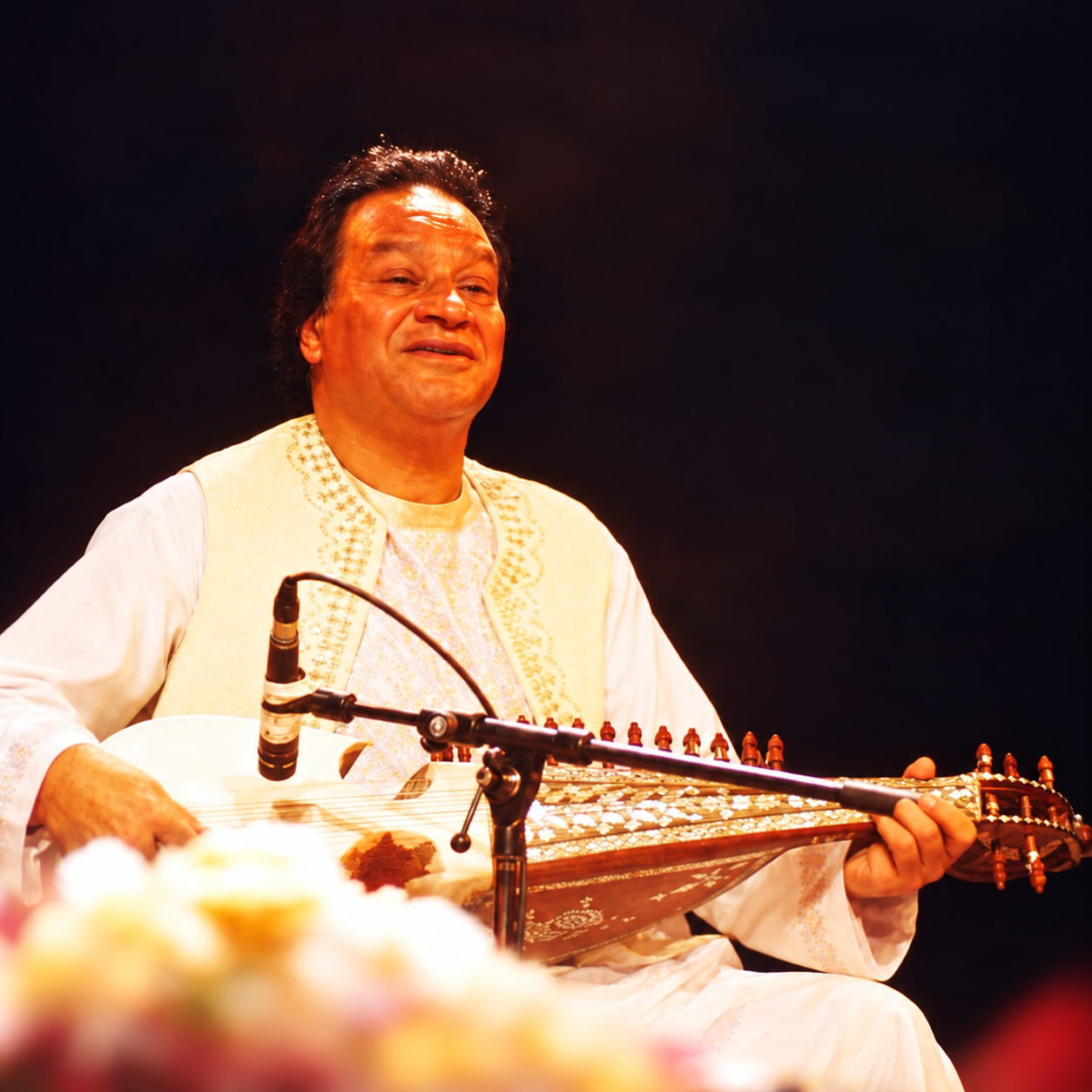
The Instrument & Its Heritage
Often described as Afghanistan's national instrument, the rubab has a distinctive voice and a rich place in the country's musical life. Its music is shared through listening, practice and the knowledge passed between generations.
At Rubab Institute, Ustad Ghulam Hussain carries forward the music he learned in Kabul's Kharabat quarter, sharing it through performance and individual teaching.
Explore the anatomy of the rubab Explore music, poetry and heritageA voice in Persian poetry
دانیکه چه میگوید این بانگ رباب؟
اندر پی من بیا و ره را دریاب
زیرا به خطا راه بری سوی صواب
زیرا به سؤال ره بری سوی جواب
Can you hear what the rabab's voice is saying? Follow its call and discover the path. Even a mistaken step may lead toward what is right; Through asking, you may find your answer.
The historical rabab of Persian poetry should not be assumed to be identical to the Afghan rubab played today.
Listen to the Music
Begin with the music itself: a recording of Ustad Ghulam Hussain playing the Afghan rubab. Press play to listen.
Performance recording
Approximately 9 minutes
Planning a concert, festival or musical project? Tell us about your idea, the venue and your preferred dates. We can discuss a programme with Ustad Ghulam Hussain and check what is possible.
For festivals, concert halls and cultural events. Get in touch to discuss the music, other musicians involved and the practical details.
Ask About a ConcertHave a collaboration in mind? We would be glad to discuss the music, arrangements and rehearsal needs with your ensemble.
Discuss a ProjectFor music schools, universities and festivals. Tell us who the session is for and what you would like your audience to learn.
Ask About a WorkshopEvery performance carries a story. Follow Ustad Ghulam Hussain's journey from the Kharabat musical tradition to concerts, cultural exchange and teaching across generations.
Born in 1960 into a family of musicians in Kuche Kharabat, Kabul, Ustad Ghulam Hussain grew up surrounded by the city's musical traditions. His father, Ustad Ghulam Hassan, was also a musician.
His rubab studies with Ustad Mohammad Omar connected him to a tradition passed directly from master to student, through listening, practice and interpretation.
He played for Afghanistan's national Radio-Television and later with the Ministry of Culture's orchestra, while sharing rubab knowledge with students.
The SAFAR project brought Afghan master musicians together with German performers for concerts in Weimar, Rudolstadt, Bonn and Berlin. Ustad Ghulam Hussain was featured at Berlin's Haus der Kulturen der Welt.
The Afghanistan Music Research Centre reports a SAFAR concert at the Philharmonie Luxembourg and lists Ustad Ghulam Hussain as the rubab performer.
Kulturbunker Kassel's retrospective documents his participation in an Afghan culture and music weekend, sharing the sound of the rubab with European audiences.
The Mainz international charity festival programme names Ustad Ghulam Hussain as a rubab musician. This is a published programme credit; completed participation has not been independently verified.
The organiser advertised a concert with Ustad Ghulam Hussain and tabla player Shukran Maray, bringing melodies of Kabul to a Berlin audience. The listing alone does not confirm that the performance took place.
Dates are shown only when independently supported. The 2025 Mainz and 2026 Berlin entries are published programme or organiser listings; they are not presented as confirmed completed performances. This selection is not a complete biography or performance history.
The rubab is an important part of Afghan musical life. Much of its music has been passed from teacher to student through listening and practice. Rubab Institute shares this knowledge through lessons, performances and work with other musicians.
Learn how to hold and play the rubab, develop a clear sound, and approach melodies and ornamentation with care.
New players can begin with the basics. Those with experience can focus on repertoire, rhythm and interpretation.
We welcome ideas from concert organisers, fellow musicians and cultural groups who want to share Afghan music with new audiences.
Afghan rubab musician from Kharabat, Kabul
Ustad Ghulam Hussain was born in 1960 in Kuche Kharabat, a neighbourhood of Kabul known for its musicians. His father, Ustad Ghulam Hassan, was also a musician. He grew up listening to the players around him and learning the music that was part of daily life in Kharabat.
He later studied with Ustad Mohammad Omar (1905-1980), who directed Radio Afghanistan's National Orchestra. This training shaped his approach to the rubab and his knowledge of the repertoire and playing techniques of the Kharabat school.
He performed for Afghan Radio-Television and with the Ministry of Culture Orchestra. He later taught rubab at the Aga Khan Music School for ten years in Kabul and led the ensemble Goldasteh Kharabat.
He is now based in Frankfurt, Germany. He continues to perform, teach and share the music he learned in Kabul.
For centuries, poetry and music have expressed love, longing and human connection. Rumi's writing gives musical sound a language of reflection, while Afghanistan's rubab tradition continues through artists such as Ustad Ghulam Hussain.
Explore the historical rabab of Rumi's world and the distinct, living heritage of the Afghan rubab.
Explore Music, Poetry & Heritageاز کجا میآید این آوای دوست؟
Where does this melody of the beloved come from?
A question for listening and reflectionLearn directly with Ustad Ghulam Hussain over video call. Lessons can focus on technique, rhythm and repertoire, depending on your experience and interests.
If you are new to the rubab, we can start with how to hold and tune it, simple playing patterns and familiar melodies.
For players who want more time with the repertoire, rhythmic detail, ornamentation and improvisation.
Write a short email about your musical background and what you would like to learn.
We can discuss available times, lesson format and what would work for you.
Fees and booking terms will be confirmed before you commit to lessons.
You can write directly to
ustad@rubabinstitute.comSend us a few lines about your experience, where you live and what you would like to learn. We will get back to you to discuss availability and possible lesson arrangements.
This button opens your email app. Nothing is sent until you send the message. Please avoid including sensitive personal details.